
Malaysian Vegan Nasi Lemak (Easy Recipe)
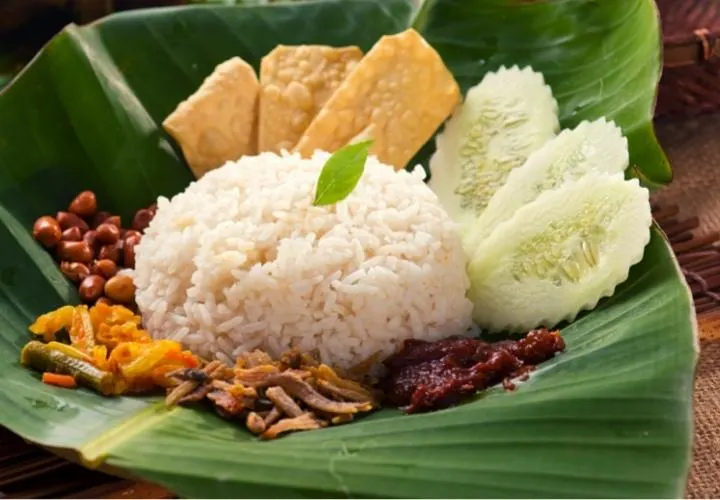
Nasi lemak is coconut rice cooked with pandan, served with a sweet and smoky chilli sambal, toasted peanuts and cucumber. It is Malaysia’s national dish, and it is usually built around ikan bilis, belacan and a boiled egg. This version swaps those for wakame, preserved radish and peanuts, so the whole plate stays plant-based.
What exactly is nasi lemak?
Nasi lemak translates literally as “fatty rice”, though “rich” or “creamy” is closer to what people mean by it. It describes rice cooked in coconut milk, with pandan leaves knotted through the pot for aroma. At larger gatherings it comes with extra protein dishes: ayam goreng (fried chicken), rendang (a slow-cooked stew) or sambal sotong (squid in chilli sauce).
You will find it everywhere in Malaysia, in morning markets, at roadside stalls, on street food carts and in hotel breakfast buffets. It is a breakfast dish above all, usually wrapped in banana leaf and eaten with the fingers. At its core it is two things: coconut rice and sambal tumis.
MindShift Mentors · 7 nights free
It’s 9pm and you’re not even hungry
The kitchen light goes on anyway. Fifteen minutes of guided audio a night, aimed at the pattern rather than the willpower.
Try 7 nights freeThat’s me, most nights
Is nasi lemak vegan?
Not as it is normally served, no. The rice is plant-based, but the standard plate is built around ikan bilis, small dried anchovies fried until crisp, and the sambal is almost always made with belacan, a fermented shrimp paste. Most versions also come with an egg.
So this is a plant-based version of the dish rather than the traditional one. Three swaps do the work:
- Belacan is replaced with soaked wakame and preserved radish. Wakame brings the deep, sea-like savouriness, and the radish gives the sambal small chewy pieces where dried shrimp would sit.
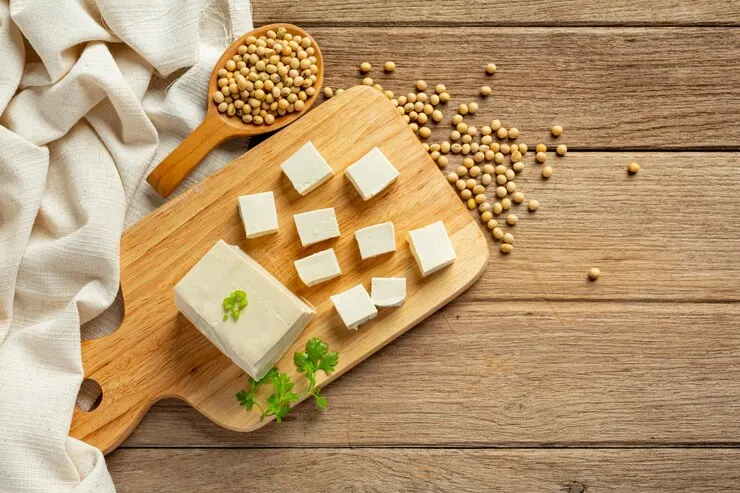
- Ikan bilis is replaced with toasted peanuts, plus crisp fried tempeh if you want more substance.
- The egg is left off, and vegan oyster sauce stands in for the usual kind.
Everything else, the coconut rice, the pandan, the chilli paste and the tamarind, is what it always was.
Why does the sambal matter so much?
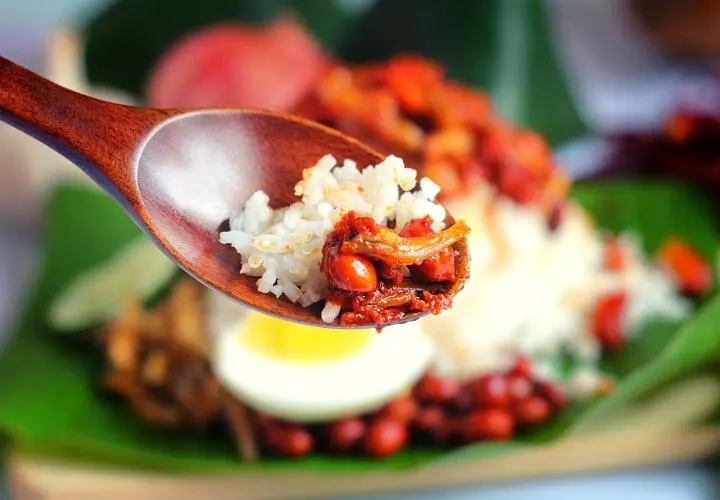
Sambal is the part people judge you on, and a plate of nasi lemak lives or dies on it. Ours starts with a blend of chilli, garlic, ginger, shallot, onion, palm sugar, tamarind pulp and, in the traditional version, belacan for Malaysian nasi lemak (shrimp paste)
Read that list and nearly every component is already plant-based. Belacan is the only exception, which is why the wakame and preserved radish go in instead.
Sambal also takes up most of the cooking time, so cook a big batch while you’re at it.
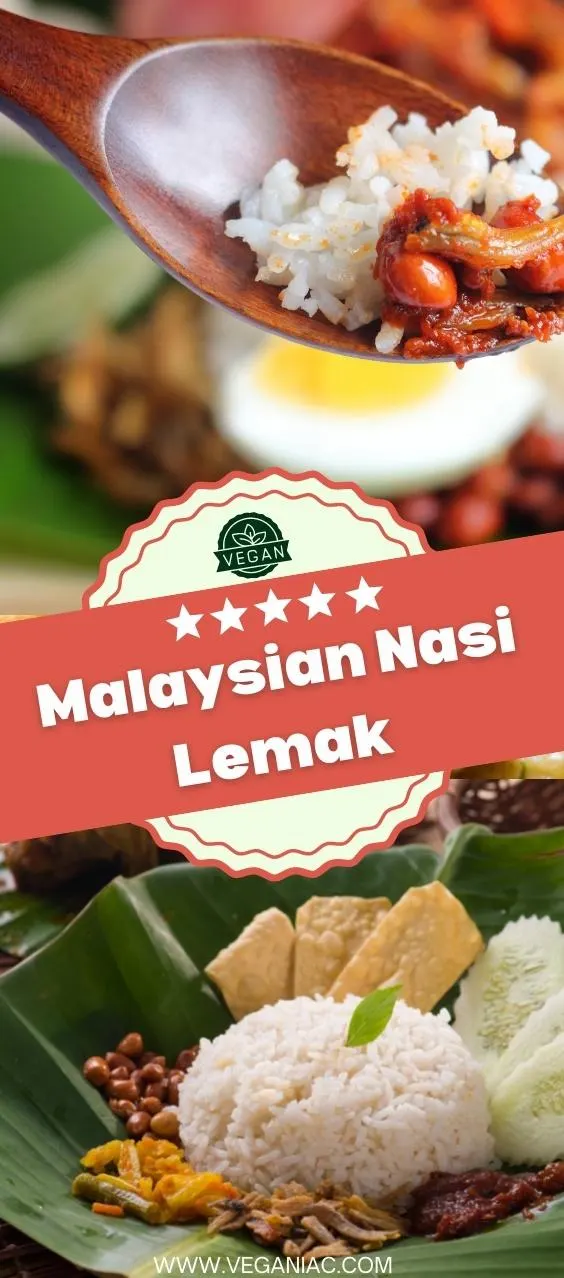
Share the image below to your Pinterest board if you like this vegan Nasi Lemak.
List of Ingredients
- 2 tsp salt
- 2 pcs pandan leaves, knotted
- 1 stick cinnamon
- 2 pieces star anise
- 4 sliced shallots
- 4-5 slices of ginger
- 2 stalk lemongrass, bruised
- 4 cup rice (about 800 g), rinsed and drained twice
- 6 cups fresh coconut milk (1.5 L), or dilute 500 g of coconut cream to 6 cups
The Sambal Tumis/Sautéed Chilli Paste Ingredient A (To purée)
- 1 tsp dried wakame, soaked
- 2 tbsp preserved Radish, soaked
- 10 chopped shallots
- 2 chopped thumb-sized ginger
- 10 cloves garlic
- 1 chopped onion
Sambal Tumis/Sautéed Chilli Paste Ingredient B
- salt to taste
- 1 tbsp vegan oyster sauce
- 1/4 cup (60 ml) tamarind/Asam Jawa water, or 1 tsp Asam diluted in water
- 1/3 cup (about 75 g) gula Melaka/palm sugar
- 1/3-1/2 cup (80-125 ml) oil
- 2 sliced onions, sliced
- 2 pieces of pandan leaves
- 10 oz (about 280 g) of dried chilli paste/cili giling/cili boh
- 10 oz (about 300 ml) of water
Directions
The Nasi Lemak
- Heat some frying oil in a wok. Fry the shallots and ginger slices until the shallots and ginger slices are aromatic.
- Whisk in the lemongrass, rice, and pandan leaves thoroughly in the wok.
- Fill the rice cooker halfway with the contents of the pan. Then, prepare per the rice cooker directions, adding coconut milk, star anise, cinnamon stick, and salt.
The Sambal Tumis
- In a blender, purée all of the ingredients until smooth, then put aside. If required, add extra water to aid in the mixing process.
- Heat the oil (vegetable) in a large pan or wok over medium-low heat before adding half of the chopped onions and the pureed components. Reduce excess moisture and sauté until aromatic.
- Stir in the dry chilli paste until everything is well combined. Cook until the chilli oil has risen to the surface.
- Put in the pandan leaves and water in three batches. Before adding the next round of water, whisk until the mixture thickens. Cook until the chilli oil has risen to the surface.
- Add the rest of the chopped onions and the palm sugar. To blend, stir everything together.
- Throw in vegan oyster sauce and tamarind/Asam Jawa water. Cook, stirring constantly, for eight to ten minutes, or until the mixture gets a dark crimson colour.
What do you serve with nasi lemak?
The plate is built in parts, so add or leave out as you like:
- Coconut rice, still warm, as the base.
- A generous spoon of sambal tumis alongside, not stirred through.
- Toasted or fried peanuts for crunch, standing in for the ikan bilis.
- Sliced cucumber, unpeeled, to cool the chilli down.
- Fried tempeh or tofu puffs for more protein, or vegan rendang for a crowd.
If you can get banana leaf, wrap individual portions in it. That is not only for looks, the leaf perfumes the rice as it sits.

Dinner’s done. Still carrying the day?
Take 15 to 20 minutes for yourself with a guided audio session for stress and overthinking.
One session, free for seven nights. No credit card.
Results vary. Designed to sit alongside professional care rather than replace it.
FAQs
Can you make nasi lemak ahead of time?
The sambal, yes, and it is better for it. Cook it a day or two ahead and the flavours settle. The rice is best made fresh, because coconut rice firms up in the fridge, though you can reheat it with a splash of coconut milk in a covered pan.
How long does the sambal keep?
In a clean, sealed jar in the fridge, sambal tumis holds for two to three weeks. The layer of oil on top helps preserve it, so don’t skim it off. It also freezes well in small portions for up to three months.
Do I have to use pandan leaves?
They are worth tracking down. Pandan gives coconut rice its grassy, almost vanilla-like aroma, and nothing quite substitutes for it. Frozen leaves from an Asian grocer are easier to find than fresh ones in Australia. Without pandan you’ll have good coconut rice, just not nasi lemak as Malaysians would know it.
Can I make it less spicy?
Yes. The heat comes from the dried chilli paste, so use less of it and make up the volume with extra onion. Brands vary, so taste as the sambal cooks down.
- Malaysian Nasi Lemak
- Plant-based Nasi Lemak
- Vegan Nasi Lemak
- vegan sambal