
Aburaage Recipe ( Japanese Deep Fried Tofu)
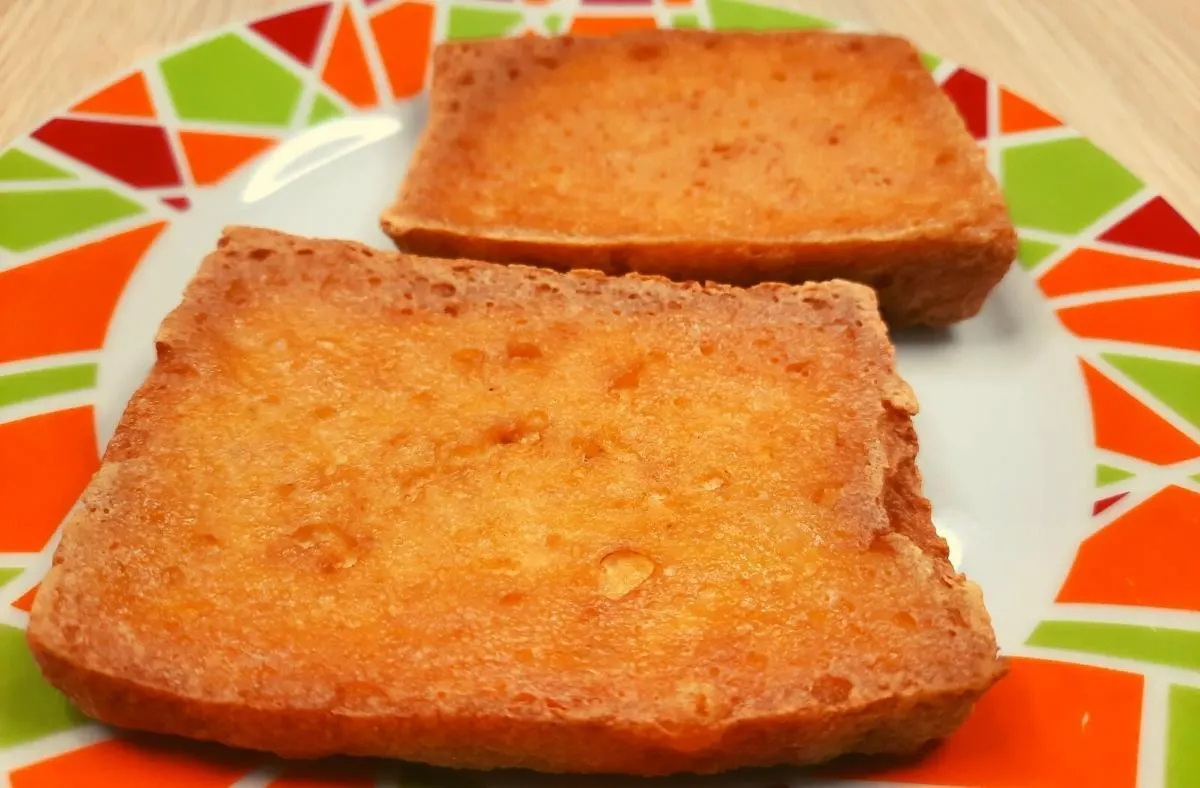
Aburaage is Japanese deep-fried tofu, made by frying thin slices of pressed tofu twice. The first fry in cool oil at around 120 °C puffs the slice up and stretches a hollow pocket through the middle. A second, hotter fry at around 190 °C sets the surface and colours it golden. That pocket is what you stuff for inari sushi.
Aburaage is a classic Japanese staple made of thinly sliced fried tofu. It behaves differently from a block of plain tofu: it holds its shape, it is easy to pick up with chopsticks, and its spongy walls soak up broth.
In Japanese cuisine, several forms of fried tofu are used, including inari-age and atsu-age. Inari-age is aburaage that has been simmered in soy sauce, dashi (a kombu-based broth), sugar and mirin. Atsu-age is a thick slab of fried tofu that looks a bit like a steak and is eaten with salads and miso soup.
MindShift Mentors · 7 nights free
It’s 9pm and you’re not even hungry
The kitchen light goes on anyway. Fifteen minutes of guided audio a night, aimed at the pattern rather than the willpower.
Try 7 nights freeThat’s me, most nights
It is a versatile ingredient that turns up in all sorts of traditional Japanese soups, stews and small dishes. Mixed rice (takikomi gohan), inari-zushi, kitsune udon and kinchaku are other examples.
What is Aburaage?
Aburaage is a Japanese deep-fried tofu product made from soybeans. It’s a staple ingredient in many vegetarian Japanese recipes. You can buy it at a Japanese grocery store or Asian market. You can even freeze it so that you can use it in future cooking. It’s also great for rice dishes. Aburaage is fried twice to get its hollow pocket and golden crust. Once cooked, it will hold the flavour of the dashi stock. I use it in my inari sushi recipe, and it is delicious.
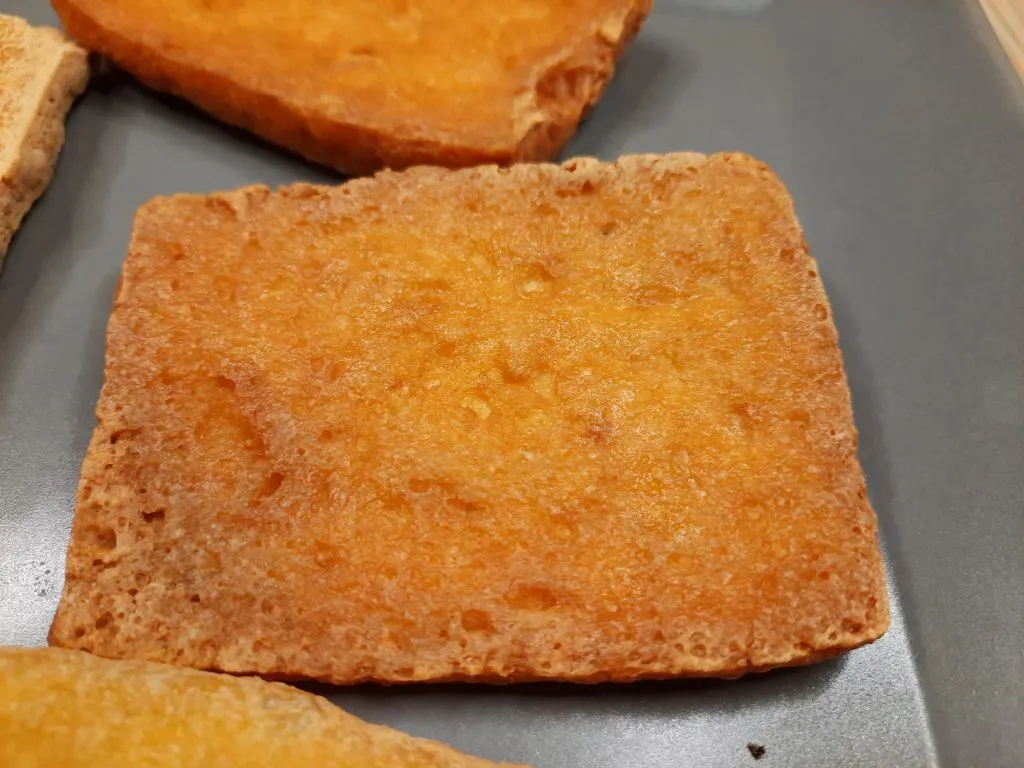
Why does aburaage need two stages of frying?
This is the whole trick, and it is why plain deep-fried tofu comes out solid while aburaage comes out hollow.
In the first stage the oil is deliberately cool, around 110 °C to 120 °C. At that temperature the outside does not set straight away. The water inside the slice turns to steam, the steam has nowhere to go, and it pushes the slice outwards from the middle. The slice roughly doubles in size and the centre separates into a cavity while the walls thin out. This takes several minutes and it looks slow, which is normal.
In the second stage you lift the oil to around 180 °C to 190 °C. Now the outside firms and browns quickly, locking the expanded shape in place before the pouch collapses. Skip the first stage and go straight into hot oil and you will get atsu-age instead: a firm, browned, solid piece of fried tofu with no pocket at all.
Two things decide whether it works. The tofu must be pressed properly, because too much water makes it steam violently and tear rather than inflate, and the slices must be thin and even, because a thick slice cannot stretch enough to hollow out.
Aburaage History
Tofu Hyakuchin, a Japanese cookbook published in 1782, collected a hundred ways of preparing tofu and included fried preparations, which is some of the earliest written evidence we have for the technique. The origins of the puffed tofu pouch itself are less clear cut, and dates given for it vary between sources. Inari-zushi, the pouches stuffed with vinegared rice, is documented from the late Edo period in the first half of the 1800s.
Because they are light and keep well, aburaage is generally made in factories these days. Demand grew through the twentieth century, and Japanese makers were reportedly turning out hundreds of thousands of packets a day by the 1980s.
Inari-zushi gets its name from the Inari shrines, where Inari, the kami associated with rice, agriculture, industry and worldly success, is worshipped. The fox is Inari’s messenger, and fried tofu is said to be a favourite of foxes. Inari-zushi is treated as a small good luck offering, and Japanese families often eat or offer it around exam time.
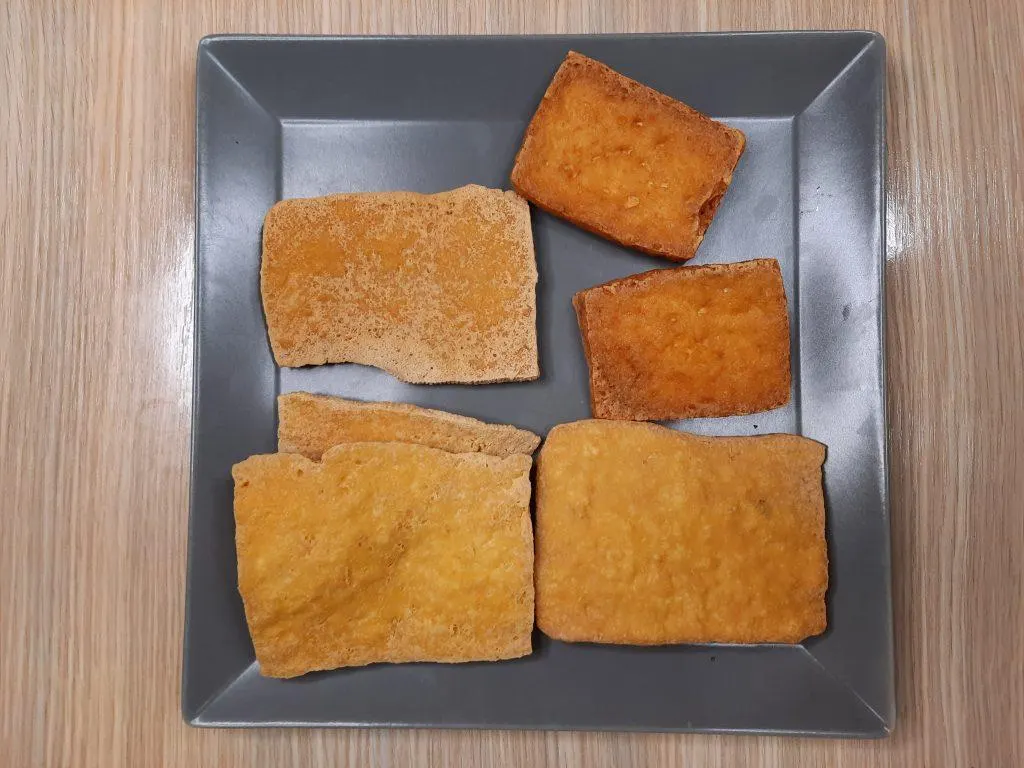
Fried tofu varieties
In Japanese cuisine, there are various forms of fried soybean curd:
- aburaage: firmer and more flexible than firm tofu, aburaage may be opened like a pocket and wrapped over rice or other fillings. It is easy to pick up with chopsticks, and its porous structure absorbs soup and stew ingredients effectively. Because the aburaage is oily, you should blot excess oil with a paper towel or rinse it in hot water before serving.
- inari-age: inari-age is aburaage simmered in a broth made of kombu, soy sauce, mirin and sugar.
- atsu-age: a thick, deep-fried slab of tofu is atsu-age. It may be eaten as a steak or chopped into miso soup and salads. Atsu-age can also be served grilled.
Note: aburaage is oily, but excess oil may be blotted away with paper towel or rinsed off with boiling water.
Aburaage Recipe
This aburaage recipe is easy to prepare and it is very delicious and can be used in many meals.
Preparation time: 5 minutes
Time to cook: 15 minutes
Total 20 minutes
- Prep time: 5 minutes
- Cook time: 15 minutes
- Total time: 20 minutes
- Serves: 8
Ingredients
- 540 g (19 oz) brick firm tofu
- Peanut oil
Directions
- Wrap the tofu block in paper towels and set it between two flat hard surfaces. Allow for an hour at room temperature to evaporate extra moisture.
- Slice it into 1 cm (about half-inch) pieces.
- Fill the pan halfway with oil and heat to 120 degrees Celsius (250 °F). Keep it there, the low temperature is what forms the pocket.
- Add 2 or more slices, depending on the size of the pan, but don’t overdo it. Crowding the pan drops the oil temperature.
- Flip the slices after 6-8 minutes, or until they have expanded and become fluffy.
- Turn the heat up and bring the oil to about 190 degrees Celsius (375 °F).
- Fry all of the tofu pieces for about 3 minutes more until golden brown.
- Remove any excess oil with paper towels or a hot water rinse (optional).
- Serve the dish immediately or cover it firmly in plastic wrap and store it in the refrigerator for later use.
Video Instructions
https://www.youtube.com/watch?v=J\_cxsREJm0I
Nutrition
- Yield: 8 servings
- Serving size: 1 piece
- Per serving: 71 calories, 5 g total fat, 1 g saturated fat, 0 g trans fat, 4 g unsaturated fat, 0 mg cholesterol, 3 mg sodium, 1 g carbohydrate, 1 g fibre, 0 g sugar, 7 g protein

Good intentions. Same old habits?
Try a guided audio session for habit change. Press play for 15 to 20 minutes each evening.
One session, free for seven nights. No credit card.
Results vary. Designed to sit alongside professional care rather than replace it.
FAQ
Why is my aburaage not puffing up?
Usually one of three things. The tofu was too wet, so press it longer and harder. The oil was too hot at the start, which sets the skin before the steam can inflate it, so check with a thermometer rather than guessing. Or the slices were too thick to stretch. Silken tofu will not work at all here, it falls apart. Use firm cotton tofu (momen).
What kind of tofu should I use?
Firm cotton tofu, the standard block sold in a tub of water. In Japan aburaage is made from a soft, freshly pressed tofu, but firm supermarket tofu is the closest thing most home kitchens have. Avoid silken, avoid the vacuum-packed shelf-stable blocks that are very dense, and avoid pre-marinated or flavoured tofu.
How long does aburaage keep?
Two or three days in an airtight container in the fridge, and about a month in the freezer. It freezes unusually well because the structure is already open and spongy, so it thaws without going watery. Freeze the pieces flat in a bag, then thaw at room temperature for 20 minutes or pour boiling water over them, which also strips off surplus oil.
What can I make with it?
Simmer it in dashi, soy sauce, mirin and sugar to make inari-age, then stuff the pouches with sushi rice for inari-zushi. Slice it into strips for miso soup, kitsune udon or takikomi gohan. Tie a pouch shut with a strip of kanpyo around a filling and you have kinchaku for a hotpot.
Conclusion
Hope you enjoyed this aburaage recipe as much as I and my family and friends did. It is easy to make and really a great addition to many meals. If you like this, pass it on.
Pin this image if you liked this recipe