
Cucumber Kimchi (Oi Sobagi), Vegan and Quick
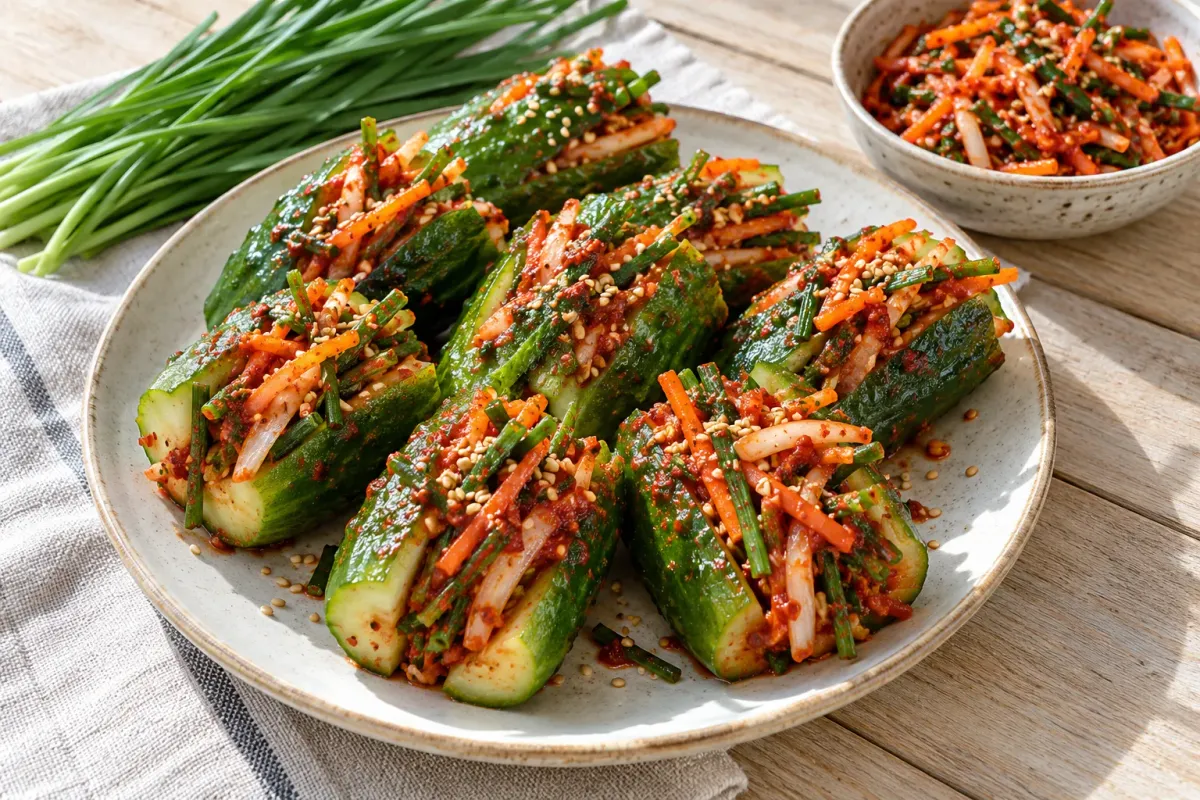
Cucumber kimchi, oi sobagi in Korean, is small cucumbers split into quarters from one end, salted for about 30 minutes until they bend without snapping, then stuffed with a filling of garlic chives, carrot, onion and gochugaru. You can eat it an hour later. Unlike cabbage kimchi it is made to be eaten fresh, and it is at its best in the first week. This version leaves out the fish sauce and salted shrimp and uses soy sauce, a little white miso and kelp water for the savoury depth instead.
How it differs from cabbage kimchi
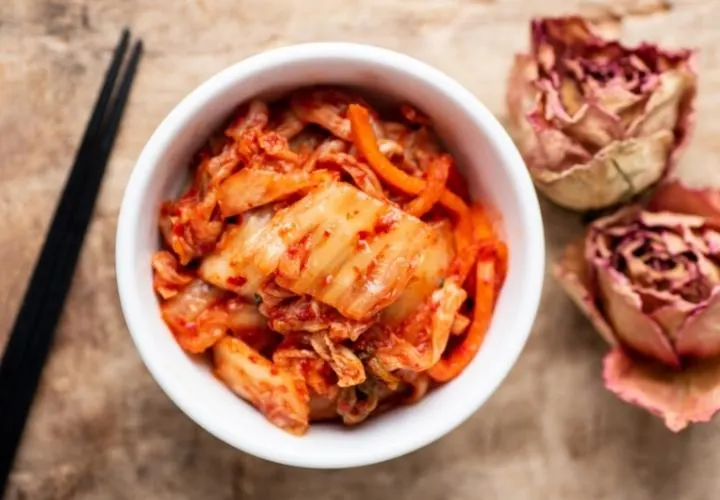
The napa cabbage kimchi is a slow ferment. It sits on the bench for a couple of days, goes sour and fizzy, and keeps for months in the fridge. Cucumber kimchi is the quick one. It gets a short salting, a stuffing, and it is on the table the same day.
That difference comes down to the vegetable. Cabbage stays pleasant to eat as it sours and softens. Cucumber does not. After a week or so it loses the crunch that is the whole point of it, so oi sobagi is made in small batches and eaten while it is still crisp.
MindShift Mentors · 7 nights free
It’s 9pm and you’re not even hungry
The kitchen light goes on anyway. Fifteen minutes of guided audio a night, aimed at the pattern rather than the willpower.
Try 7 nights freeThat’s me, most nights
| Cucumber kimchi (oi sobagi) | Cabbage kimchi (baechu kimchi) | |
|---|---|---|
| Salting | About 30 minutes | About 2 hours |
| Ready to eat | Straight away, or after a day on the bench | After 1 to 3 days on the bench |
| Best eaten | Within the first week | Over the first month, then for cooking |
| Texture | Crisp and juicy | Tender, with some crunch at the rib |
| Flavour | Fresh, bright, lightly sour by day 3 | Deeply sour and fizzy once fermented |
The salting step
Salting is what makes the cucumber take the filling. The salt draws water out of the flesh, which does two things. The cucumber turns flexible enough that you can open the cuts and push the filling in without it cracking in half, and it stays crunchy for longer because there is less water left to leak out into the jar.
The test is the bend. After 30 minutes, pick up a cucumber and flex it gently. If it bends in a slight curve, it is ready. If it still snaps straight, give it another 10 to 15 minutes. The same idea runs through the Din Tai Fung cucumber salad, where salting first is the step most copycat versions skip.
Rinse the salt off afterwards and taste a piece of the end. It should be seasoned, not harsh.
What replaces the fish sauce
Most versions of oi sobagi use fish sauce, salted shrimp or both. They are there for the savoury depth that sits under the chilli, not for the heat or the sourness. Three things do that job here:
- Soy sauce carries most of the salt and savouriness.
- White miso adds a rounder, deeper note. A teaspoon is enough.
- Kelp water from a small square of dried kombu soaked in cold water gives the filling a gentle sea flavour, which is the closest thing to what the salted shrimp brings.
Gochugaru has no real substitute. It is a coarse Korean chilli flake, fruity and only moderately hot, and chilli powder, cayenne or paprika each make something that is not kimchi. It keeps for a year in the freezer.
Vegan Cucumber Kimchi Recipe
- Prep time: 25 minutes
- Salting time: 30 minutes
- Total time: 55 minutes
- Serves: 6 as a side
- Cooking: none
Ingredients
For the cucumbers
- 6 Lebanese cucumbers, about 800 g
- 2 tablespoons coarse sea salt
For the kelp water
- 1 piece dried kombu, about 5 cm square
- ¼ cup cold water
For the filling
- 1 bunch garlic chives, about 50 g, cut into 1 cm lengths
- 1 small carrot, cut into fine matchsticks
- ¼ small brown onion, very thinly sliced
- 3 tablespoons gochugaru, Korean chilli flakes
- 3 cloves garlic, finely grated
- 1 teaspoon finely grated fresh ginger
- 1½ tablespoons soy sauce or tamari
- 1 teaspoon white miso
- 2 teaspoons caster sugar
- 1 teaspoon toasted sesame seeds
Method
- Soak the kombu. Put the kombu in the cold water and leave it while the cucumbers salt. You will use 3 tablespoons of this water in the filling.
- Cut the cucumbers. Trim both ends, then cut each cucumber into three pieces about 7 cm long. Stand each piece on end and cut down into it in a cross, stopping about 1 cm from the bottom, so you get four spears still joined at the base.
- Salt them. Put the cucumbers in a bowl, sprinkle over the salt and rub some into the cuts. Leave for 30 minutes, turning them every 10 minutes. They are ready when they bend slightly without snapping.
- Make the filling while they salt. Mix the gochugaru, garlic, ginger, soy sauce, miso, sugar and 3 tablespoons of the kelp water into a paste. Leave it for 5 minutes so the chilli flakes soften, then fold through the chives, carrot and onion.
- Rinse and dry the cucumbers. Rinse them twice in cold water, drain, and pat them dry with a clean tea towel. Water left on the outside dilutes the filling and makes it slide out.
- Stuff them. Wearing gloves, hold each piece open at the cuts and push a small pinch of filling into the centre, then smear a little over the outside. Do not overfill, or the base splits.
- Pack the container. Stand or lay the stuffed cucumbers snugly in a glass or plastic container. Scrape any filling left in the bowl over the top, then sprinkle over the sesame seeds.
- Eat now or rest. It is good to eat straight away as a fresh kimchi. For a slightly tangier result, leave the lid on loosely at room temperature for 6 to 12 hours, then put it in the fridge.
Tips
- Lebanese cucumbers are the easiest match in Australian shops for the Korean cucumbers the dish is usually made with. They are thin skinned with small seeds. Continental cucumbers have too much seedy middle and turn soggy in a day.
- If you cannot find garlic chives, use 4 spring onions cut into 1 cm lengths. It will taste a little milder.
- Add half a thinly sliced nashi pear to the filling if you want a sweeter, juicier kimchi.
- Salting the cucumbers whole in the fridge is not a shortcut. The salt only gets in properly through the cut faces.

Good intentions. Same old habits?
Try a guided audio session for habit change. Press play for 15 to 20 minutes each evening.
One session, free for seven nights. No credit card.
Results vary. Designed to sit alongside professional care rather than replace it.
How long it keeps, and how it changes
In an airtight container in the fridge, cucumber kimchi keeps for about two weeks. It is safe to eat for that long, but it is a different thing at the end than at the start.
| When | What it is like |
|---|---|
| Day 1 | Crisp and juicy, tastes of chilli and garlic, barely sour |
| Days 2 and 3 | The flavours settle into the cucumber, a light sourness starts, still crunchy |
| Days 4 to 7 | Noticeably tangy, more liquid in the container, the crunch starts to soften |
| Week 2 | Soft and sour, better chopped into fried rice or noodles than eaten as it is |
The liquid that gathers in the bottom is normal. It is the water the salt did not draw out, now mixed with the filling. Spoon some of it over the cucumbers when you serve them.
Throw it out if you see fuzzy mould, if it smells off rather than sour, or if the cucumbers turn slimy. Soft and tangy is fine. Slimy is not.
Do not freeze it. Cucumber collapses into water when it thaws.
What to serve it with
Oi sobagi is a banchan, one of the small side dishes set out with a Korean meal, so it goes next to things rather than being a dish on its own.
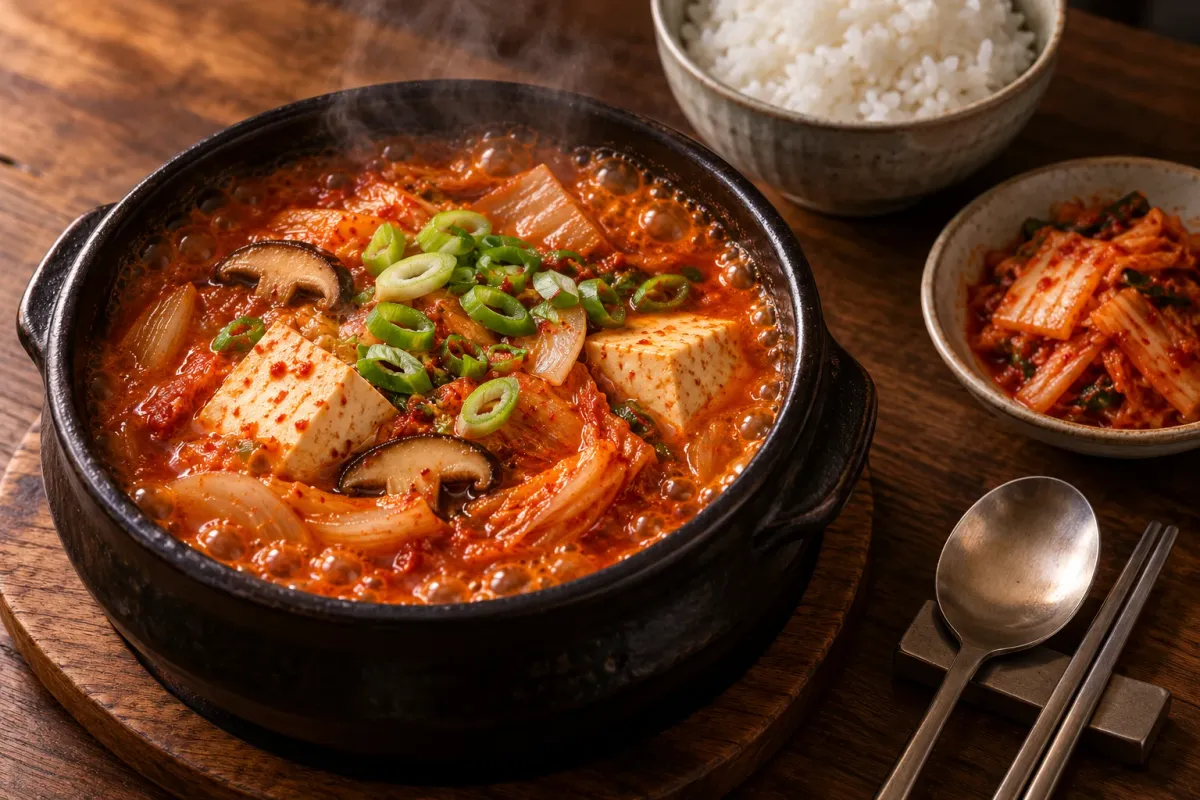
- Steamed rice and a bowl of soft tofu stew
- Vegan tteokbokki, where the cold crunch sits well next to the chewy rice cakes
- Japchae or any noodle dish that wants something sharp beside it
- Barbecued tofu or mushrooms in lettuce wraps
- Din Tai Fung garlic green beans, for a hot, garlicky side next to the cold one
Frequently Asked Questions
What is oi sobagi?
Oi sobagi is Korean stuffed cucumber kimchi. Oi means cucumber and sobagi refers to the stuffing. Small cucumbers are cut into quarters from one end, salted, and filled with chives, carrot and a gochugaru paste. It is usually eaten fresh or after a short rest rather than fermented for days.
Is cucumber kimchi vegan?
Traditional versions usually are not, because they often contain fish sauce, salted shrimp or both. This recipe uses soy sauce, white miso and kelp water in their place. Shop-bought cucumber kimchi is worth checking, since most jars still list fish sauce or shrimp.
How long does cucumber kimchi last in the fridge?
About two weeks in an airtight container. It is at its crunchiest in the first three days and at its best within the first week. After that it turns soft and sour, which is still fine for cooking.
Do I have to ferment cucumber kimchi?
No. You can eat it as soon as it is stuffed. Leaving it at room temperature for 6 to 12 hours before it goes into the fridge gives it a light tang sooner, but it will sour slowly in the fridge either way.
Why did my cucumber kimchi go soggy?
Usually one of three things. The cucumbers were not salted long enough, so too much water stayed in them. They were not dried after rinsing. Or they were continental cucumbers, which have a wetter, seedier centre than Lebanese ones.
Can I use regular cucumbers?
You can, but choose the smallest, firmest ones you can find and scoop out any large seeds before stuffing. Lebanese cucumbers give the closest result to Korean cucumbers in Australia.
Can I make it without garlic chives?
Yes. Spring onions cut into short lengths are the usual swap. Garlic chives have a stronger, garlicky flavour, so the kimchi will be a little milder without them.
The short version
Split the cucumbers from one end, salt them until they bend, rinse and dry them, then push in a filling of chives, carrot and gochugaru paste with soy sauce and miso doing the job fish sauce usually does. Eat it the same day or over the next week, while it still crunches. For the long, sour, keep-for-months kind, the napa cabbage kimchi is the one to make next, and once that jar has gone properly sour it belongs in kimchi jjigae. If you are wondering whether any of it does your gut good, Is kimchi good for your gut? looks at what the research does and does not show.
- cucumber kimchi
- oi sobagi
- vegan kimchi
- kimchi
- cucumber
- Korean side dish