

How to Stop Eating at Night When You Are Not Even Hungry
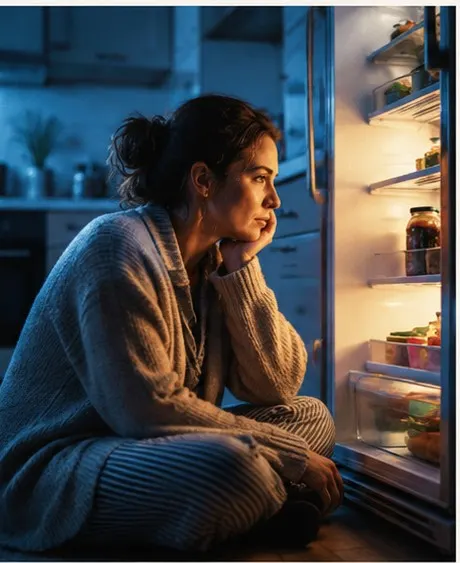
It is 9pm. You ate a decent dinner, you are not hungry, and you are standing at the pantry anyway. You did not really decide to go there. Your feet did.
If that sounds familiar, the useful news is that it is rarely about food, and it is rarely about willpower either. It is a habit that runs itself, and habits have a shape you can work with.
This piece draws on two essays by Rob Edmonds, co-founder of MindShift Mentors, from his Substack: one on a three-minute reset for a spiralling mind and one on what changes when a pattern breaks. The food side is ours.
MindShift Mentors · 7 nights free
It’s 9pm and you’re not even hungry
The kitchen light goes on anyway. Fifteen minutes of guided audio a night, aimed at the pattern rather than the willpower.
Try 7 nights freeThat’s me, most nightsWhy it happens at night
During the day there is structure. Work, school runs and meal times make most of the decisions for you. By evening that structure is gone, you are tired, and the part of you that made sensible plans at 8am has clocked off.
What is left is whatever the evening has trained you to do. If the pantry has been the way you wind down, mark the end of the day or take the edge off a hard one, then 9pm and a snack are linked, and the link fires on its own. That is why “just don’t do it” fails so reliably. You are arguing with something that does not listen to arguments.
“I have done this for twenty years”
A lot of people assume a habit that old is locked in. Rob’s view is that how long you have had a pattern does not decide how hard it is to change. What matters more is what keeps it going now: the cue, the tiredness, the feeling you are trying to switch off, the packet that is always there.
That shifts the question from “what is wrong with me” to “what is keeping this going tonight”, which is a question you can actually answer.
The three-minute reset for the pantry moment
This is Rob’s pattern interrupt, applied to the kitchen. It is designed for the moment you notice yourself heading there, not for the next morning.
- Break the state. Do something physical and different. Stand up if you are sitting, step outside for a minute, wash your face, change rooms. The aim is to break the run of the automatic response.
- Come back into the room. Name a few things you can see and hear. Feel your feet on the floor. It sounds too simple to matter, and that is the point: it asks nothing of a tired brain.
- Take one small action. Rob’s example is making a cup of tea. Put the kettle on, pour a glass of water, or clean your teeth, which is a fairly reliable signal to yourself that eating is done for the day.
Sometimes you will still have the snack. That is fine. Each time the sequence runs, even partly, the automatic response gets a little less automatic.
The food side: what a recipe site can add
Eat enough at dinner. If dinner was a salad and good intentions, 9pm hunger is real hunger, and no reset will outlast it. A dinner with protein, fibre and some fat in it holds you better. The high-protein vegan meal prep plan is a week of them, and lentil bolognese is a good place to start.
Plan the evening snack instead of banning it. A ban tends to backfire: the tighter the rule, the stronger the pull to break it. We wrote about that restriction and rebellion loop in why you sabotage your healthy eating every Sunday night. Decide on something you actually like, put it in a bowl, and eat it sitting down. Our vegan snacks and sweets list has plenty to choose from.
Move the cue. If the biscuits live at eye level next to the kettle, the kettle becomes a cue for biscuits. Put them somewhere you have to go looking.
Notice the drink. A glass of wine at 8pm makes the 9pm pantry a lot more persuasive for most people.
When it is more than a habit
If eating at night feels out of your control, comes with a lot of guilt or secrecy, or you find yourself eating large amounts in a short time, please talk to your GP. In Australia the Butterfly Foundation’s National Helpline is on 1800 33 4673 and is free and confidential. Night eating that feels like that deserves proper support, and none of the suggestions here are a substitute for it.
FAQs
Why do I eat at night when I am not hungry?
Usually because the evening has trained it. When a snack has been the way you wind down or mark the end of the day for long enough, the time and the food become linked, and the urge arrives on its own. Tiredness makes it stronger, because the planning part of you has less to give at 9pm than at 9am.
Is eating at night bad for you?
Not in itself. What and how much you eat across the day matters more than the clock. Eating at night becomes a problem when it feels automatic and unwanted, or when a heavy late snack gets in the way of your sleep.
How do I stop snacking after dinner?
Eat a dinner that genuinely fills you, plan one evening snack you enjoy rather than banning them altogether, and move the usual snacks out of sight. When the urge comes, try the three-minute reset above: change your state, come back into the room, and take one small action such as making a tea.
What if I have been a night snacker for years?
It is common to assume an old habit is fixed. Rob Edmonds’ view is that how long you have had a pattern matters less than what keeps it going now, so the more useful thing to look at is tonight’s cue, not the last twenty years.

Good intentions. Same old habits?
Try a guided audio session for habit change. Press play for 15 to 20 minutes each evening.
One session, free for seven nights. No credit card.
Results vary. Designed to sit alongside professional care rather than replace it.
Rob writes regularly about habits and patterns on his Substack, The MindShift Method. You can read more about him and his work on his page here.
- night eating
- cravings
- habits
- vegan