
Is Kimchi Good for Your Gut? What Fibermaxxing Gets Right
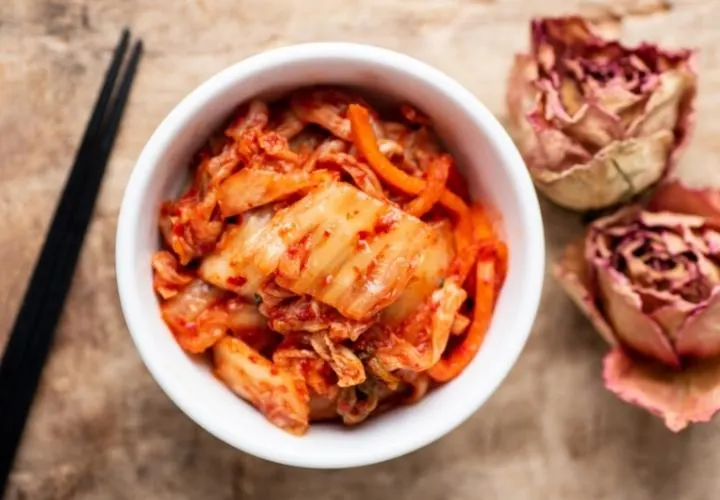
Kimchi is a fermented vegetable, so unpasteurised kimchi carries live lactic acid bacteria along with a small amount of fibre. That makes it a reasonable part of a varied, plant-heavy diet. The research on what it does for the gut is promising but small, and kimchi is high in salt, so it works best as a side dish rather than as a fix for anything.
That is a less exciting answer than social media tends to give, so the rest of this page is the detail behind it: what is actually in a jar, what changes when you cook it, and how it fits with fibermaxxing, the trend of loading as much fibre into every meal as you can.
What is actually in a jar of kimchi
Three things matter here, and only one of them is the reason people ask the question.
MindShift Mentors · 7 nights free
It’s 9pm and you’re not even hungry
The kitchen light goes on anyway. Fifteen minutes of guided audio a night, aimed at the pattern rather than the willpower.
Try 7 nights freeThat’s me, most nightsLive cultures. Kimchi ferments because lactic acid bacteria already living on the cabbage, garlic and ginger feed on the sugars in the vegetables and turn them into acid. That is where the sourness and the fizz come from. A jar of unpasteurised kimchi is full of these bacteria, and the number and mix change as it ages.
Fibre, but not much. Kimchi is mostly cabbage and radish, which are vegetables, so there is fibre in it. A side-dish portion is small, though, and it adds up to roughly a gram or two. Useful, not a big contributor on its own.
Salt. Salt is what makes fermentation work safely, and it stays in the finished kimchi. A small serve can carry a noticeable share of a day’s salt, which is the part worth keeping in mind if you eat it at every meal.
What the research does and does not show
The honest summary is that fermented foods look interesting and the evidence is still early.
The study most often quoted is a 2021 Stanford trial published in the journal Cell. Thirty-six healthy adults spent ten weeks on either a high-fibre diet or a diet high in fermented foods, including kimchi, yoghurt, kefir and kombucha. The fermented-food group’s gut bacteria became more varied over the ten weeks. The high-fibre group’s, on average, did not change much in that time.
It is worth reading that carefully before drawing anything from it. It was 36 people, for ten weeks, and the fermented group worked up to around six serves of fermented food a day, which is a lot more than a spoonful of kimchi next to dinner. The fermented foods were also a mix, so the result is about fermented foods as a group rather than kimchi in particular. It is a reason for more research, not a reason to treat a jar as medicine.
It is also worth knowing the difference between a fermented food and a probiotic. A probiotic is a specific, identified live microorganism that has been tested and shown to have a particular benefit at a particular dose. Kimchi contains live bacteria, but which ones, and how many, varies from batch to batch. Scientists in the field, including the International Scientific Association for Probiotics and Prebiotics, keep the two terms separate for that reason.
Cooking changes it
The live bacteria in kimchi do not survive heat. Once kimchi goes into a hot pan or a simmering pot, the cultures are gone.
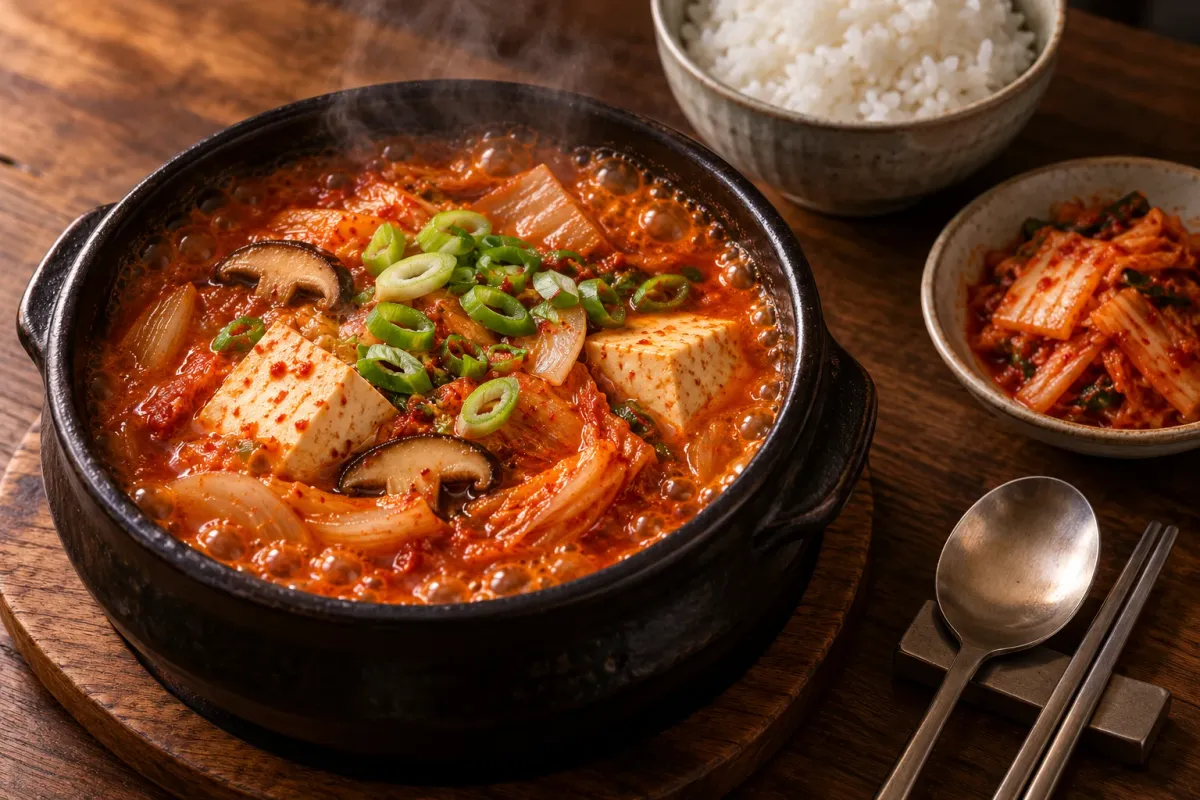
That does not make cooked kimchi pointless. Kimchi jjigae, kimchi fried rice and kimchi pancakes are some of the best things to do with an old jar, and the cabbage still brings its fibre and its flavour. It just means that if the live cultures are the reason you are eating it, the raw kimchi on the side is the part doing that job, not the stew.
The same goes for shop-bought kimchi that has been pasteurised to make it shelf stable. If it sits on an unrefrigerated shelf and the lid is not bulging, the cultures have usually been killed. Refrigerated, unpasteurised kimchi is the live kind, and the label will normally say so.
Where fibermaxxing fits
Fibermaxxing is the push, mostly on social media, to get as much fibre as possible into every meal: beans in everything, chia on top, an extra handful of vegetables wherever one will fit. The underlying idea is sound. Many Australian adults eat less fibre than the National Health and Medical Research Council recommends for adults, which is 25 grams a day for women and 30 grams for men.
Where it goes wrong is the speed. Going from a low-fibre diet to a very high one in a week tends to bring bloating and wind, and people decide fibre does not agree with them. Building up over a few weeks and drinking more water alongside it is the usual advice.
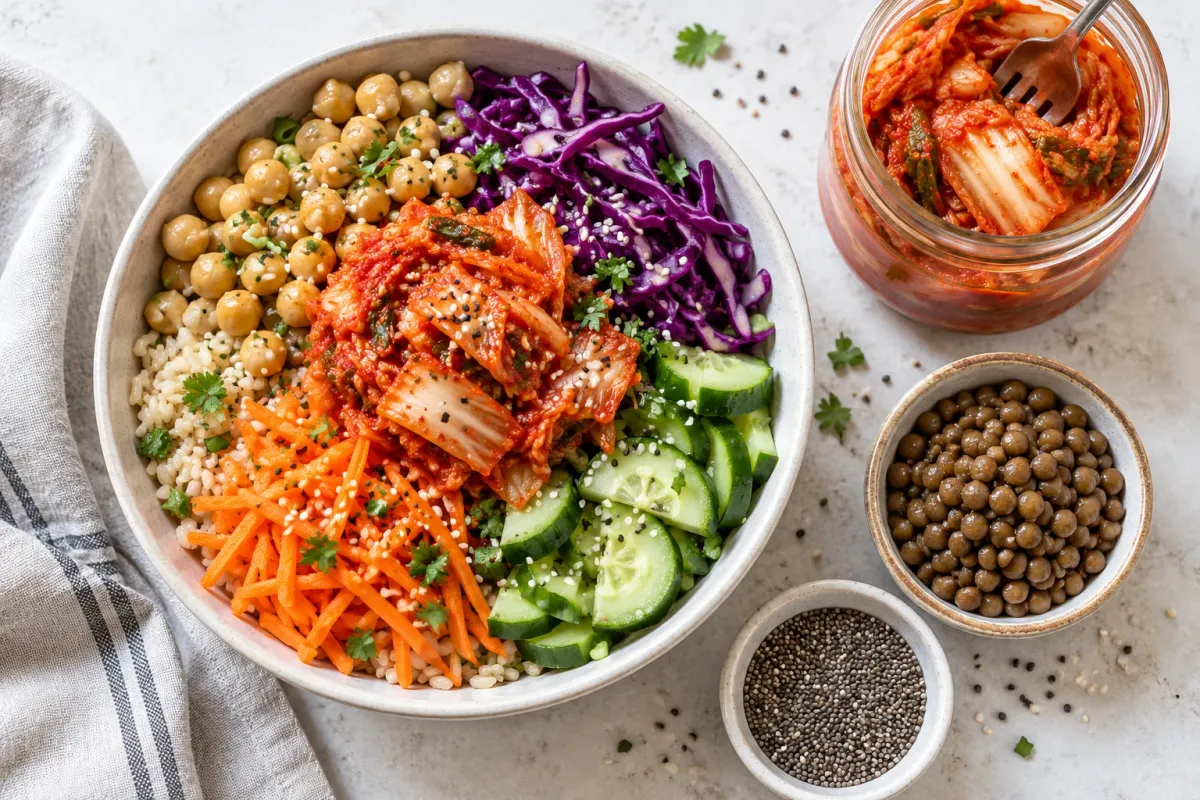
Kimchi sits a little to one side of all this. It is a fermented food more than a fibre food, so it does a different job from a bowl of lentils. On a plant-based plate the two sit together easily: the lentils, beans, wholegrains and vegetables doing the heavy fibre work, and a small serve of kimchi bringing the live cultures and the sharpness.
Easy ways to eat more of both
- A spoonful of raw kimchi on top of rice, noodles or a grain bowl, added after the cooking rather than during it
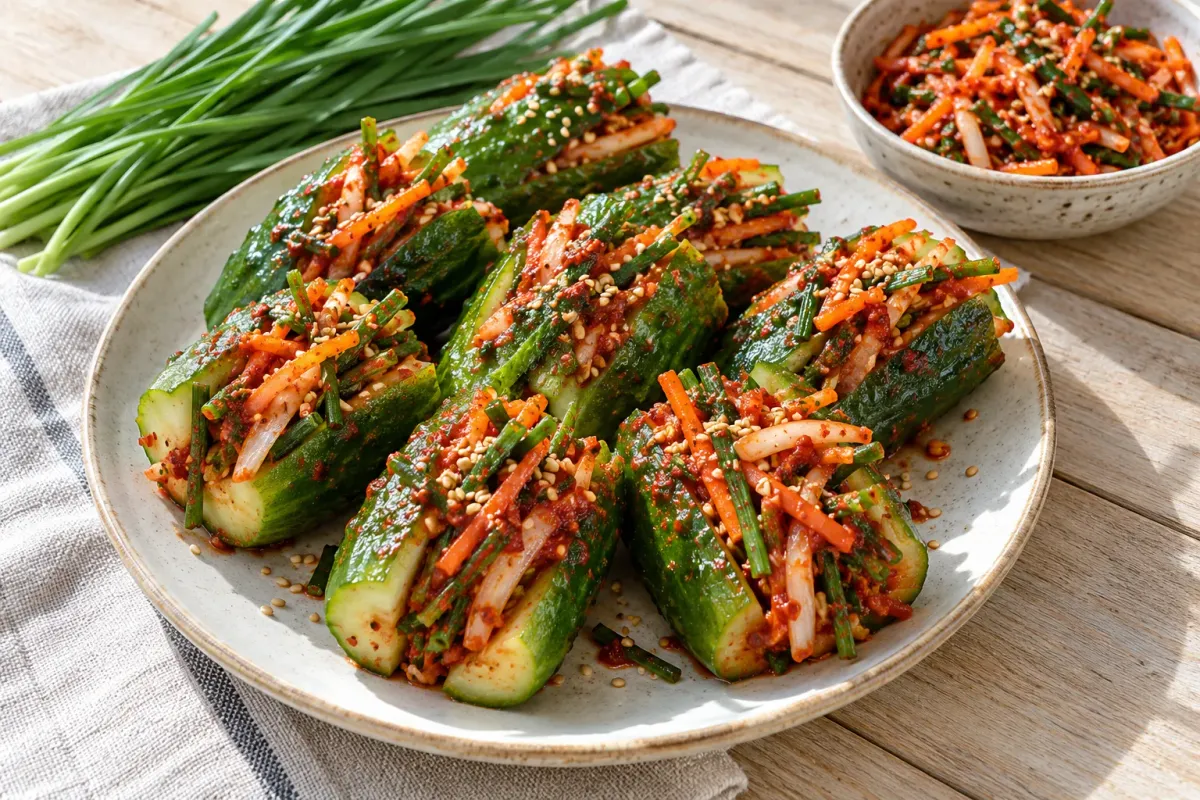
- Vegan cucumber kimchi, which is ready the same day if you have never fermented anything before
- Napa cabbage kimchi, the long ferment, which keeps for months in the fridge
- Japchae with a heap of extra vegetables through the noodles and kimchi on the side
- A Din Tai Fung style cucumber salad next to dinner, which is not fermented but is a quick way to get more vegetables on the table

Good intentions. Same old habits?
Try a guided audio session for habit change. Press play for 15 to 20 minutes each evening.
One session, free for seven nights. No credit card.
Results vary. Designed to sit alongside professional care rather than replace it.
Who should be careful
Kimchi is an everyday food for millions of people, and for most it is simply a side dish. A few situations are worth a conversation with your doctor or a dietitian before you start eating it daily: if you have been told to watch your salt, if you have a digestive condition such as IBS where fermented or high-FODMAP foods can be a trigger, or if you are on a medication that interacts with aged and fermented foods. A recipe site cannot tell you which of those applies to you.
Frequently Asked Questions
Is kimchi a probiotic?
Not in the strict sense. A probiotic is a specific live microorganism that has been tested and shown to have a particular benefit at a particular dose. Kimchi contains live lactic acid bacteria, but which ones and how many varies from batch to batch, so it is better described as a fermented food with live cultures.
Does cooking kimchi kill the good bacteria?
Yes. The live cultures do not survive heat, so kimchi in a stew, fried rice or pancakes no longer carries them. The cabbage still brings its fibre and flavour. If live cultures are the reason you are eating it, eat some raw on the side.
How much fibre is in kimchi?
Not a lot. Kimchi is mostly cabbage and radish, and a typical side-dish portion adds up to roughly a gram or two of fibre. Beans, lentils, wholegrains, vegetables and fruit do far more of the work toward the 25 to 30 grams a day recommended for adults in Australia.
Is shop-bought kimchi as good as homemade?
It depends on the jar. Refrigerated, unpasteurised kimchi carries live cultures in the same way homemade does. Shelf-stable kimchi has usually been pasteurised, which kills them. Most shop-bought kimchi also contains fish sauce or salted shrimp, so check the label if you eat vegan.
What is fibermaxxing?
Fibermaxxing is a social media trend of getting as much fibre as possible into every meal. The idea behind it is reasonable, since many adults eat less fibre than recommended, but increasing it quickly tends to cause bloating. Building up over a few weeks and drinking more water is the usual advice.
How much kimchi should I eat a day?
In Korea it is eaten in small side-dish portions alongside a meal. Because kimchi is high in salt, the size of the portion is the part worth paying attention to. If you have a health reason to watch salt or fermented foods, check with your doctor.
The short version
Kimchi brings live cultures, a little fibre and a lot of flavour, and it brings salt with it. The research on fermented foods and the gut is interesting and early, and none of it makes kimchi a cure for anything. Eat it raw on the side if the cultures are the point, cook the sour jar into jjigae when it has gone past its best, and let beans, wholegrains and vegetables do the heavy lifting on fibre. If the harder part is sticking with any of it once the week gets busy, why healthy eating doesn’t stick is the other half of this site.
- kimchi
- fibermaxxing
- fermented foods
- fibre