
Vegan Kimchi Jjigae (Kimchi Stew)
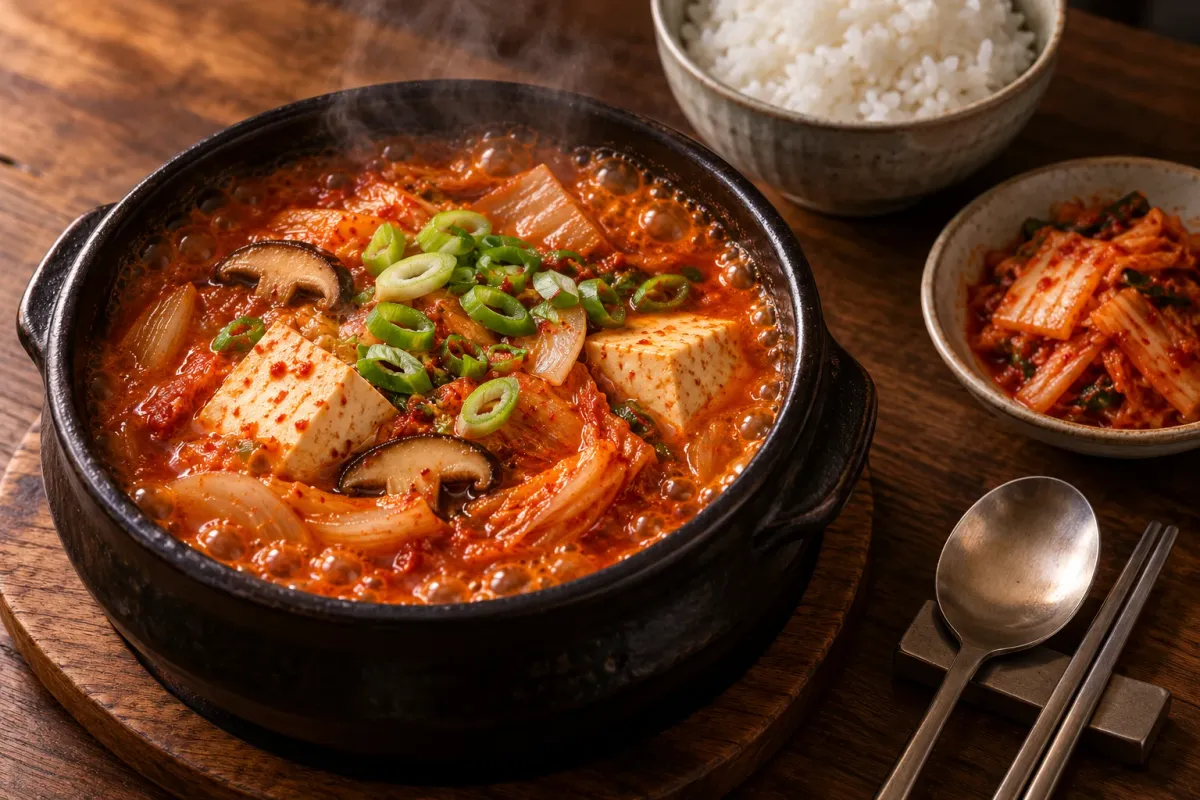
Kimchi jjigae is a Korean stew built on old, sour kimchi. The kimchi is fried in sesame oil until it softens and darkens, then simmered with its own brine, gochujang, gochugaru and a broth, and finished with tofu and spring onion. The traditional versions use pork belly or tuna and an anchovy stock. This one uses a kombu and dried shiitake broth and a little soy sauce for the savoury depth, and it is on the table in about 35 minutes.
Why it wants sour kimchi
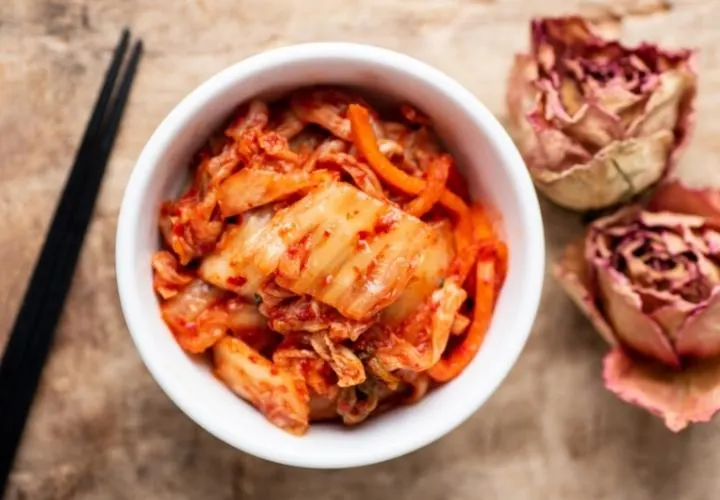
This is the dish the back-of-the-fridge jar was waiting for. Fresh kimchi is crunchy, bright and only lightly sour, and in a stew it tastes thin. Kimchi that has been in the fridge for a month or more has turned soft, deeply sour and fizzy, and that sourness is what the whole stew is built on. When the kimchi has gone past the point of eating it as a side, it is at its best here.
If your kimchi is young, you can still make it. Add a teaspoon of rice vinegar at the end and taste. It gets you part of the way, not all of it.
MindShift Mentors · 7 nights free
It’s 9pm and you’re not even hungry
The kitchen light goes on anyway. Fifteen minutes of guided audio a night, aimed at the pattern rather than the willpower.
Try 7 nights freeThat’s me, most nights
The brine counts too. Half a cup of the red liquid from the jar goes into the pot, and it carries as much flavour as the cabbage does. Do not tip it down the sink when the jar is nearly empty.
What replaces the pork and anchovy
Most kimchi jjigae gets its depth from two places: fatty pork fried with the kimchi, and a stock made from dried anchovies and kelp. Here the jobs are split differently.
- Frying the kimchi in sesame oil for a good five minutes, until the edges catch, gives the stew the rounded, slightly caramelised base the pork fat usually brings.
- Kombu and dried shiitake make a broth with real savouriness in it. The shiitake soaking water does most of the work, so it all goes in.
- Soy sauce and gochujang add the salt and a little sweetness and heat.
Check your kimchi and your gochujang. Most shop-bought kimchi contains fish sauce or salted shrimp, and while most gochujang is plant-based, a few brands are not. Homemade vegan kimchi takes the guesswork out of the first one.
Vegan Kimchi Jjigae Recipe
- Prep time: 10 minutes
- Cook time: 25 minutes
- Total time: 35 minutes
- Serves: 3 with rice
Ingredients
For the broth
- 1 piece dried kombu, about 10 cm square
- 4 dried shiitake mushrooms
- 3 cups water
For the stew
- 1 tablespoon toasted sesame oil
- 2 cups well-fermented vegan kimchi, about 300 g, roughly chopped
- ½ cup kimchi brine from the jar
- ½ brown onion, sliced
- 3 cloves garlic, finely chopped
- 1 tablespoon gochujang
- 1 to 2 teaspoons gochugaru, Korean chilli flakes, to taste
- 1 tablespoon soy sauce or tamari
- 1 teaspoon caster sugar, if the kimchi is very sour
- 300 g silken or soft tofu
- 2 spring onions, sliced
- Steamed rice, to serve
Method
- Make the broth. Put the kombu, dried shiitake and water in a saucepan and leave them to soak while you prepare everything else, about 10 minutes. Bring to a gentle simmer, then take out the kombu just before it boils, because boiled kombu turns slimy and bitter. Lift out the shiitake, slice them thinly and keep the broth.
- Fry the kimchi. Heat the sesame oil in a heavy pot over medium heat. Add the kimchi and fry, stirring now and then, for about 5 minutes, until it softens, darkens and starts to catch at the edges.
- Add the aromatics. Stir in the onion, garlic and sliced shiitake and cook for 2 minutes. Add the gochujang and gochugaru and stir for 30 seconds so the paste fries in the oil.
- Simmer. Pour in the broth, the kimchi brine and the soy sauce. Bring to the boil, then turn down and simmer, partly covered, for 12 to 15 minutes, until the kimchi is tender and the broth has turned deep red.
- Taste and balance. If it is sharply sour, stir in the sugar. If it needs salt, add a little more soy sauce. If it needs more heat, add gochugaru.
- Add the tofu. Spoon the tofu into the pot in large pieces and let it warm through for 3 minutes without stirring, so it stays in soft chunks.
- Serve. Scatter over the spring onions and bring the pot to the table with bowls of steamed rice.
Tips
- A heavy, wide pot gives the kimchi room to fry rather than steam. A Korean earthenware pot is traditional but any heavy saucepan works.
- For a heartier stew, add sliced zucchini or a handful of enoki mushrooms with the broth, or a few rice cakes in the last 5 minutes.
- Firm tofu works if that is what you have. Cut it into thick slices so it holds together.
- It is better the next day, so a double batch is worth it. Add fresh tofu when you reheat.

Dinner’s done. Still carrying the day?
Take 15 to 20 minutes for yourself with a guided audio session for stress and overthinking.
One session, free for seven nights. No credit card.
Results vary. Designed to sit alongside professional care rather than replace it.
What to serve it with
Jjigae is served bubbling, in the middle of the table, with rice and a few small side dishes.
- Steamed short-grain rice, which is not optional
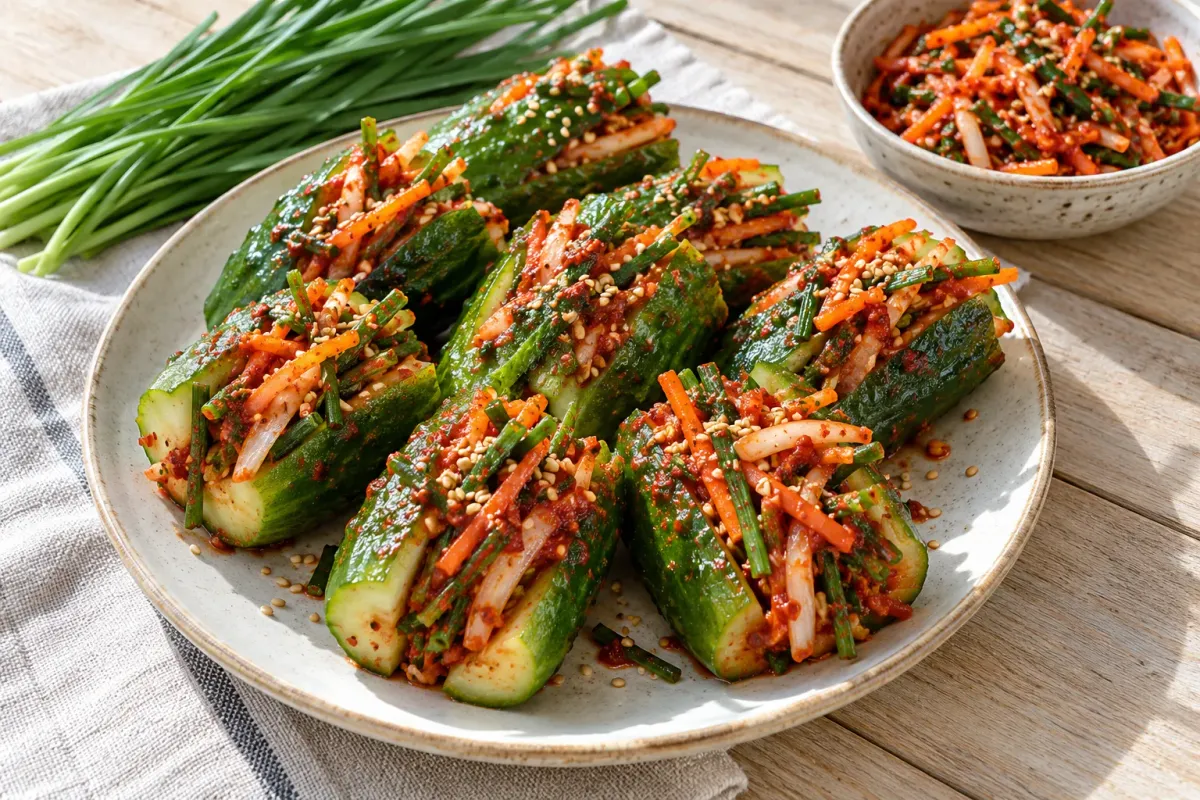
- Vegan cucumber kimchi, for something cold and crisp next to the hot stew
- Japchae, the glass noodle dish, if you want a bigger spread
- Vegan tteokbokki for a full Korean night in
- Din Tai Fung garlic green beans as a quick green side
If you want another brothy bowl for cold nights, the Thai coconut soup and the vegan gnocchi soup both sit in the same weeknight slot.
Storing and reheating
Keep leftovers in an airtight container in the fridge for up to 3 days. The flavour deepens overnight, so the second bowl is often the better one. Reheat gently on the stove until it is simmering, and add a splash of water if it has thickened.
You can freeze it without the tofu for up to 3 months. Silken tofu goes spongy in the freezer, so add fresh tofu when you reheat.
Frequently Asked Questions
What is kimchi jjigae?
Kimchi jjigae is a Korean stew made with well-fermented kimchi, its brine, gochujang and a broth, usually with tofu. Jjigae means a thick, stew-like soup, and it is one of the most common home-cooked dishes in Korea.
Is kimchi jjigae vegan?
Not usually. Traditional versions use pork belly or canned tuna and an anchovy stock, and the kimchi itself normally contains fish sauce or salted shrimp. This recipe uses vegan kimchi, a kombu and shiitake broth and soy sauce instead.
Can I use fresh kimchi in kimchi jjigae?
You can, but the stew will taste flatter. The sourness of old kimchi is what gives jjigae its flavour. If your kimchi is young, add a teaspoon of rice vinegar at the end and taste before adding more.
What is the difference between kimchi jjigae and kimchi soup?
Jjigae is thicker and more strongly seasoned than a guk, the Korean word for a lighter soup. Kimchi jjigae is meant to be eaten with rice, a spoonful at a time, rather than as a bowl of broth on its own.
How spicy is kimchi jjigae?
Medium, and easy to adjust. Most of the heat comes from the gochugaru, so start with 1 teaspoon and add more at the end. The kimchi and gochujang bring some heat of their own.
Can I make kimchi jjigae ahead?
Yes. It keeps for 3 days in the fridge and tastes better the next day. Leave the tofu out if you are making it well ahead, and add it when you reheat.
The short version
Fry sour kimchi in sesame oil until it catches, add garlic, onion and gochujang, then simmer it in a kombu and shiitake broth with a good splash of kimchi brine. Finish with soft tofu and spring onion and eat it with rice. The older and sourer the kimchi, the better it gets. If your jar is not there yet, the kimchi recipe is where to start, and Is kimchi good for your gut? covers what happens to the live cultures when it goes into a hot pot.
- kimchi jjigae
- kimchi stew
- vegan kimchi
- kimchi
- Korean soup